import numpy as np
import pandas as pd
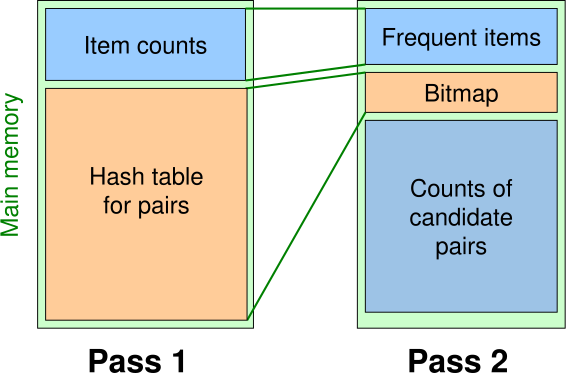
import itertoolsHow PCY Algorithm works
An Effective Hash-Based Algorithm for Mining Association Rules.
Initializing the transaction baskets
# initialize lists
data = [[1,2,5], [2,3,5], [4,5], [1,6,7], [2,3,5,7], [1,2,7]]
pairs = [list(itertools.combinations(i, 2)) for i in data]
mydict = {'Items':data, 'Pairs': pairs}

# Create the pandas DataFrame with column name is provided explicitly
df = pd.DataFrame(mydict)

# Print dataframe
display(df)| Items | Pairs | |
|---|---|---|
| 0 | [1, 2, 5] | [(1, 2), (1, 5), (2, 5)] |
| 1 | [2, 3, 5] | [(2, 3), (2, 5), (3, 5)] |
| 2 | [4, 5] | [(4, 5)] |
| 3 | [1, 6, 7] | [(1, 6), (1, 7), (6, 7)] |
| 4 | [2, 3, 5, 7] | [(2, 3), (2, 5), (2, 7), (3, 5), (3, 7), (5, 7)] |
| 5 | [1, 2, 7] | [(1, 2), (1, 7), (2, 7)] |
Calculating the supports
print(data)[[1, 2, 5], [2, 3, 5], [4, 5], [1, 6, 7], [2, 3, 5, 7], [1, 2, 7]]supports = {}
for row in data:
for e in row:
if e not in supports:
supports[e] = 0
# Sorting dictionary
sorted_dict = supports.keys()
suppports = sorted(sorted_dict)
print(supports){1: 0, 2: 0, 5: 0, 3: 0, 4: 0, 6: 0, 7: 0}for row in data:
for e in row:
supports[e] += 1
print(supports){1: 3, 2: 4, 5: 4, 3: 2, 4: 1, 6: 1, 7: 3}item = [ key for key, value in supports.items()]
supp = [ value for key, value in supports.items()]
unique_items_count = {'Itemset': item, 'Sup': supp}
df_item_sup = pd.DataFrame(unique_items_count)
display(df_item_sup)| Itemset | Sup | |
|---|---|---|
| 0 | 1 | 3 |
| 1 | 2 | 4 |
| 2 | 5 | 4 |
| 3 | 3 | 2 |
| 4 | 4 | 1 |
| 5 | 6 | 1 |
| 6 | 7 | 3 |
Pass 1
def hash_f_pair(i,j):
    return (i*j) % 7
unique_items = []
for row in pairs:
for e in row:
if e not in unique_items:
unique_items.append(e)
print(unique_items)[(1, 2), (1, 5), (2, 5), (2, 3), (3, 5), (4, 5), (1, 6), (1, 7), (6, 7), (2, 7), (3, 7), (5, 7)]unique_items[0][1]2hash_value_pairs = []
for e in unique_items:
hash_value_pairs.append(hash_f_pair(e[0],e[1]))
print(hash_value_pairs)[2, 5, 3, 6, 1, 6, 6, 0, 0, 0, 0, 0]my_dict2 = {}
for pair in unique_items:
my_dict2[str(pair)] = 0
print(my_dict2){'(1, 2)': 0, '(1, 5)': 0, '(2, 5)': 0, '(2, 3)': 0, '(3, 5)': 0, '(4, 5)': 0, '(1, 6)': 0, '(1, 7)': 0, '(6, 7)': 0, '(2, 7)': 0, '(3, 7)': 0, '(5, 7)': 0}for row in pairs:
for e in row:
my_dict2[str(e)] +=1
print(my_dict2){'(1, 2)': 2, '(1, 5)': 1, '(2, 5)': 3, '(2, 3)': 2, '(3, 5)': 2, '(4, 5)': 1, '(1, 6)': 1, '(1, 7)': 2, '(6, 7)': 1, '(2, 7)': 2, '(3, 7)': 1, '(5, 7)': 1}counts = [ value for key, value in my_dict2.items()]
print(counts)
# df_counts = pd.DataFrame()[2, 1, 3, 2, 2, 1, 1, 2, 1, 2, 1, 1]unique_items_count = {'Pairs': unique_items, 'Count': counts, 'Hash': hash_value_pairs}
print(unique_items_count){'Pairs': [(1, 2), (1, 5), (2, 5), (2, 3), (3, 5), (4, 5), (1, 6), (1, 7), (6, 7), (2, 7), (3, 7), (5, 7)], 'Count': [2, 1, 3, 2, 2, 1, 1, 2, 1, 2, 1, 1], 'Hash': [2, 5, 3, 6, 1, 6, 6, 0, 0, 0, 0, 0]}df_counts = pd.DataFrame(unique_items_count)
display(df_counts)| Pairs | Count | Hash | |
|---|---|---|---|
| 0 | (1, 2) | 2 | 2 |
| 1 | (1, 5) | 1 | 5 |
| 2 | (2, 5) | 3 | 3 |
| 3 | (2, 3) | 2 | 6 |
| 4 | (3, 5) | 2 | 1 |
| 5 | (4, 5) | 1 | 6 |
| 6 | (1, 6) | 1 | 6 |
| 7 | (1, 7) | 2 | 0 |
| 8 | (6, 7) | 1 | 0 |
| 9 | (2, 7) | 2 | 0 |
| 10 | (3, 7) | 1 | 0 |
| 11 | (5, 7) | 1 | 0 |
Minium support count is 2 so we eliminate from the Pair list the items that have less than 2 from Table 1. The resulting table is called the Candidate Pairs.
df_counts_after = df_counts.drop([5, 6, 8])
display(df_counts_after)| Pairs | Count | Hash | |
|---|---|---|---|
| 0 | (1, 2) | 2 | 2 |
| 1 | (1, 5) | 1 | 5 |
| 2 | (2, 5) | 3 | 3 |
| 3 | (2, 3) | 2 | 6 |
| 4 | (3, 5) | 2 | 1 |
| 7 | (1, 7) | 2 | 0 |
| 9 | (2, 7) | 2 | 0 |
| 10 | (3, 7) | 1 | 0 |
| 11 | (5, 7) | 1 | 0 |
Pass 2
The final step is to build a table from Table 2 that counts the number of ocurrences per hash value.
hash_values = [x for x in range(max(hash_value_pairs)+1)]
my_dict3 = {}
for e in hash_values:
    my_dict3[e] = 0

for i, hash_value in enumerate(df_counts["Hash"]):
    my_dict3[hash_value] += df_counts["Count"][i]
print(my_dict3)

data_bucket = {"Bucket": hash_values, "Count": my_dict3.values()}
df_bucket_count = pd.DataFrame(data_bucket)
display(df_bucket_count)
{0: 7, 1: 2, 2: 2, 3: 3, 4: 0, 5: 1, 6: 4}| Bucket | Count | |
|---|---|---|
| 0 | 0 | 7 |
| 1 | 1 | 2 |
| 2 | 2 | 2 |
| 3 | 3 | 3 |
| 4 | 4 | 0 |
| 5 | 5 | 1 |
| 6 | 6 | 4 |
With the result above we can look back to table Table 3 and see which hash values, have a value lower than the minimum support count. That is hash value 4 and 5. With this result we look at table Table 3 and delete those corresponding hash values. The final result is teh Final Candidates
df_counts_after_pass2 = df_counts_after.drop([1])
display(df_counts_after_pass2)| Pairs | Count | Hash | |
|---|---|---|---|
| 0 | (1, 2) | 2 | 2 |
| 2 | (2, 5) | 3 | 3 |
| 3 | (2, 3) | 2 | 6 |
| 4 | (3, 5) | 2 | 1 |
| 7 | (1, 7) | 2 | 0 |
| 9 | (2, 7) | 2 | 0 |
| 10 | (3, 7) | 1 | 0 |
| 11 | (5, 7) | 1 | 0 |